
Set the number of text columns
Do one of the following:
For the whole document: Click in any text in the document.
If the document has multiple sections, this only applies to the section you click in.
For specific paragraphs: Select the paragraphs you want to change.
For text in a text box or shape: Select the object.
Click the Layout button near the top of the sidebar on the right.
If you don’t see a sidebar, or the sidebar doesn’t have a Layout button, click
 in the toolbar. If the text is in a text box, table, or shape, first click the Text tab at the top of the sidebar, then click the Layout button.
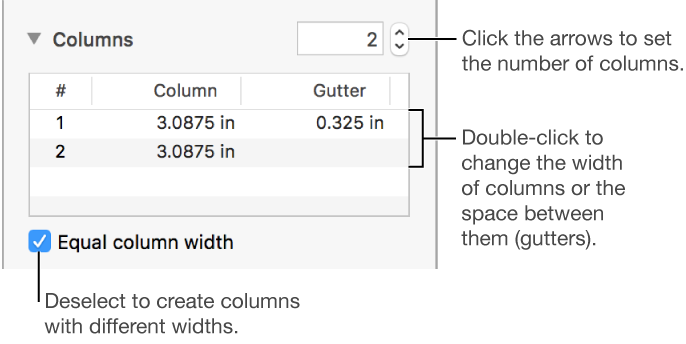
Use the controls in the Columns section to set the number of columns and their spacing:
Set the number of columns: Click the arrows next to the Columns value field.
Set column spacing: Double-click the values in the Column and Gutter columns then type the width for the column.
Set different column widths: Deselect the checkbox next to Equal column width.
If you added a table to your document and want to resize columns, see Resize table rows and columns for instructions.
 in the