Tap
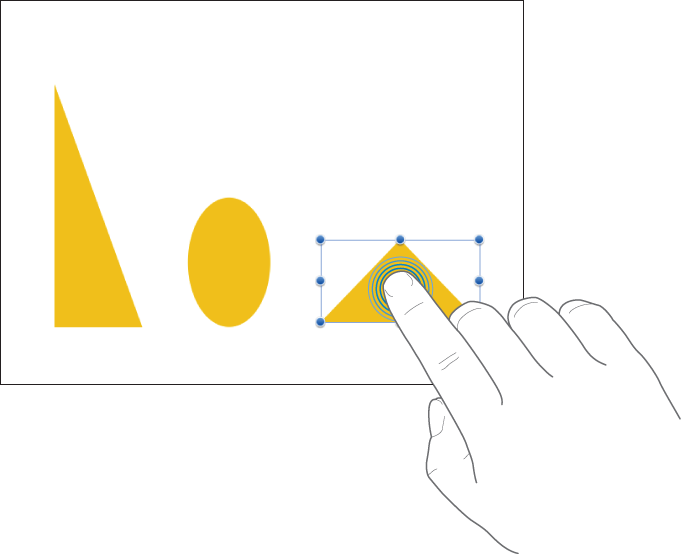
Using one finger, quickly and firmly touch the screen, then lift your finger. Use this gesture to select an object or activate a button.

Gestures are critical when using Numbers on your iOS device. These are the gestures you need to know:
Tap
Using one finger, quickly and firmly touch the screen, then lift your finger. Use this gesture to select an object or activate a button.
Drag
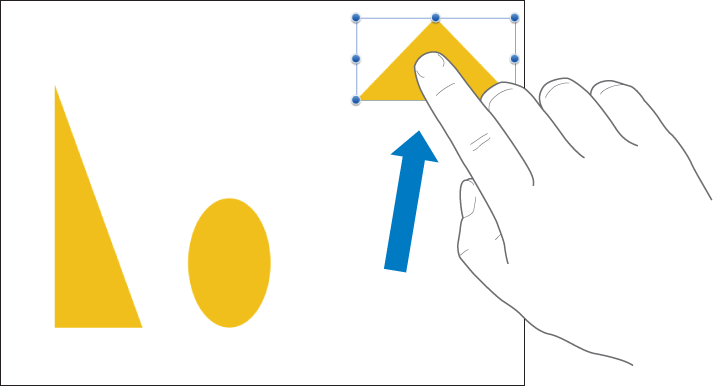
You can drag to move an object, or to resize an object or selection range.
To move an object, touch and hold the object, then drag it to where you want it. To resize an object, tap it, touch and hold one of the selection handles, then drag to resize.
Select multiple objects
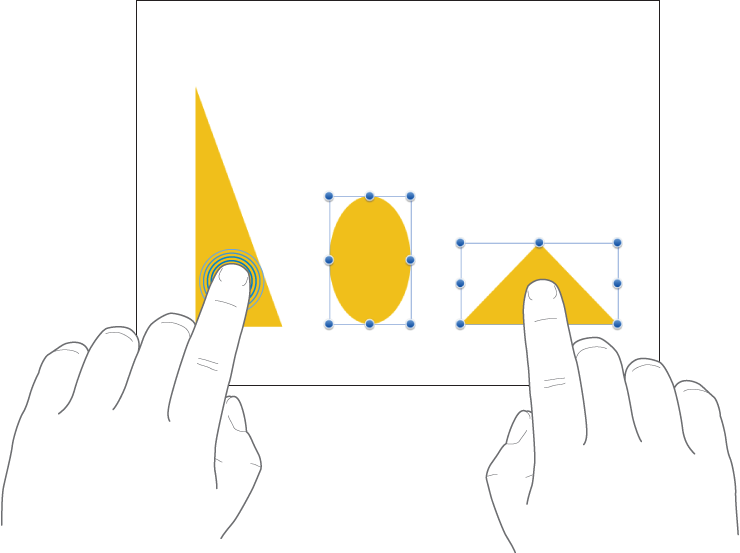
Select as many objects as you want by touching and holding one object on the screen, then tapping the other objects with another finger. Use both hands if it’s easier.
Pinch open to zoom in
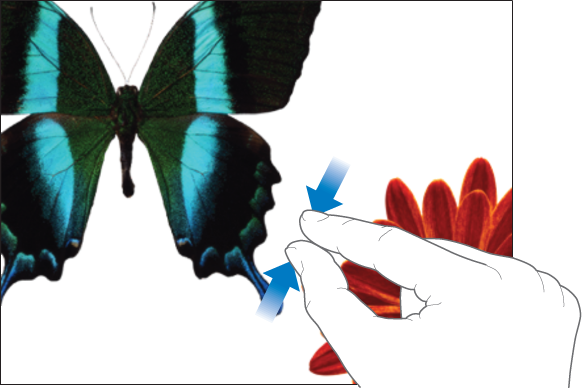
Place two fingers on the screen and spread them apart. This allows you to see a close-up of items on the screen. If you’re beginning with the sheet size at 100 percent in Numbers (the normal view), pinch open quickly to immediately increase the sheet size up to 150 or 200 percent. If you want an in-between size, pinch open more slowly. An indicator shows you the current magnification level as you pinch.

Pinch closed to zoom out
Place two fingers on the screen and bring them together. This allows you to see more items on the screen. If you’re beginning with the sheet size at 100 percent in Numbers (the normal view), pinch closed quickly to decrease the sheet size to 50 percent. If you want an in-between size, pinch closed more slowly. An indicator displays the current magnification level as you pinch.
Scroll, swipe, flick
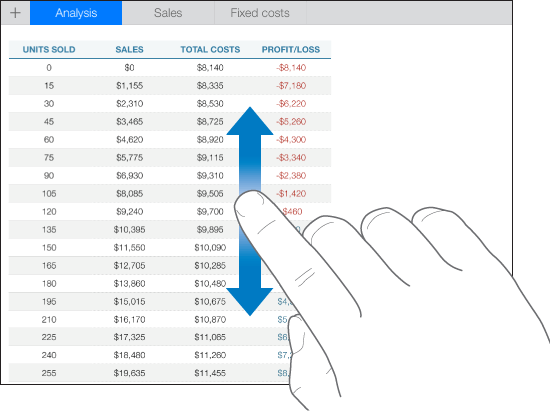
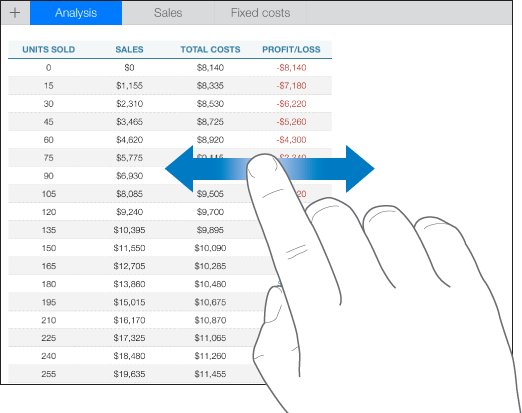
Scroll slowly by sliding one finger up and down or side to side on the screen. Scroll quickly (swipe or flick) by whisking one finger rapidly across the screen. Scrolling allows you to see more rows and columns in a table, any items that are currently beyond the edges of the screen, or more options and controls within a window.
Any header rows or columns in your table are frozen by default. This means that they stay put as you scroll within the body of the table.
You can turn header freezing off or on. To learn how, see the task about freezing header rows or columns in Add and rearrange rows and columns.
Accessibility
To learn about using universal access features, including VoiceOver, see the Accessibility chapter in your device’s user guide.